
When driving, you can't fight fatigue and drowsiness: taking a break is the only solution! Fatigue and drowsiness at the wheel are the cause of one in three fatal accidents. They remain the leading cause of death on highways. When driving, you can't fight fatigue and drowsiness: there's no magic bullet, the only remedy is to take a break.
What are the main signs of fatigue and drowsiness while driving?
- Difficulty concentrating while driving
- Fixed gaze
- Heavy eyelids, stinging eyes, repeated blinking
- Repeated yawning
- Constant need to change position
- Pain and stiffness in the neck, shoulders, and back
- Numbness in the legs
If you experience any of these signs: you must stop and take a break!
Only this rest period allows you to regain the attention and concentration necessary for driving.
How to prevent falling asleep at the wheel during journeys?
It's commonly said that you should stop every 2 hours; this is a minimum: it's safer to assume that you should take a break as soon as you feel the first signs of fatigue, even if you only have a few kilometers left to travel.
At the first sign of fatigue, stopping at a rest area for a 15-minute nap or switching drivers will allow you to continue your journey safely.
How to manage drowsiness and fatigue on long holiday journeys?
1 in 2 drivers reduces their usual sleep time when leaving for vacation, either to move up their departure time or to prepare the vehicle for loading. The driver then leaves with a sleep debt.
To avoid drowsiness at the wheel: leave well-rested!
Don't take unnecessary risks by driving while tired.
Get a good night's sleep the night before you leave.
Avoid leaving after a tiring day at work.
Take a nap (maximum 1 hour 30 minutes).
Good to know!
You can fall asleep at any time of day, but there are two risky periods when you should be particularly careful: between 2 and 5 a.m., when our biological clock tells us it's time to sleep, and at midday, whether we've had lunch or not.
What factors increase the risk of fatigue and drowsiness?
Medications:
Some medications affect alertness. You should discuss this with your doctor and check the pictograms on the medication packaging:
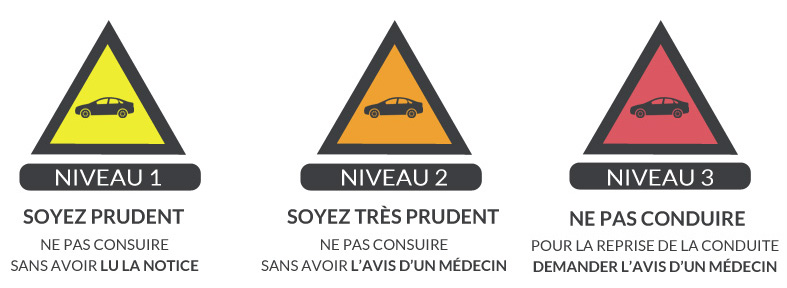
Sleep Deprivation:
This occurs when you are sleep-deprived over several days. At the beginning of the week, you go to bed late and get up early. This leads to a backlog, and the risk of falling asleep at the wheel is highest at the end of the week. It can also stem from a deeper cause such as sleep apnea. If you experience snoring, headaches upon waking, etc., don't hesitate to consult your doctor. Alcohol: It affects alertness. Alcohol relaxes you and alters your perception of your surroundings. Because of this relaxation, you can fall asleep after just one drink, especially when combined with a lack of sleep.
A heavy or very large meal:
Eating a lot of fatty food increases the risk of drowsiness. The energy required for digestion impairs the concentration needed for driving. Before setting off, it's best to eat light and take advantage of regular breaks to refuel.
Lack of ventilation:
A lack of ventilation and airflow causes drowsiness. Excessive CO2 levels are bad for driving, and when combined with excessive heat or cold, it promotes sleepiness. Remember to ventilate your vehicle well before setting off and at each stop.
Some common misconceptions...
- Fatigue and drowsiness at the wheel only occur on long journeys.
All drivers are affected, even on short trips of less than 2 hours. Fatigue is responsible for 1 in 3 accidents on highways, and half of these occur on journeys of less than 2 hours. And especially just before arriving at your destination.
Sleep doesn't care about distance. The risk of drowsiness is particularly high on daily commutes: 50% of accidents occur on journeys of less than 100 km!
- Drinking coffee or energy drinks prevents drowsiness.
Drinking coffee provides a brief energy boost, but it's a false friend: its effect is limited. The same is true for energy drinks.
- Turning the car radio up full blast and opening the window prevents you from falling asleep.
Opening your window and turning the radio up loud is a trap. Sleep will eventually catch up with you. The only solution: stop and take a break.
How to choose the best rest stop on the motorway?
Stop in a quiet, peaceful spot. For 15 to 20 minutes, stop everything, get comfortable, and make sure you're woken up. After your break, hydrate, air out the car, do some relaxation exercises, and you'll be ready to go again.
On our highways, you'll find a rest area on average every 20 km and a service area every 60 km.
To help you choose, locate our rest areas by highway here and see all the services they offer!
To learn more about our motorway service areas:
Need to refuel or recharge your vehicle?
All types of fuel and energy are available at our service areas.
See the list of all our service stations.
See the list of all our electric charging stations!
Need a bite to eat?
Whether you're traveling alone, with friends, colleagues, or family, for any hunger pang or snack: you'll find numerous restaurants and sandwich shops at our service areas.