
What are the specific road signs for toll motorways without barriers or stops?
Free-flow tolling revolutionizes your motorway experience: no more slowing down or stopping to pass through a barrier. But how do you know if you're on a motorway equipped with this new system? Several visual and contextual elements can confirm it. Here's everything you need to know to easily recognize a free-flow toll motorway.
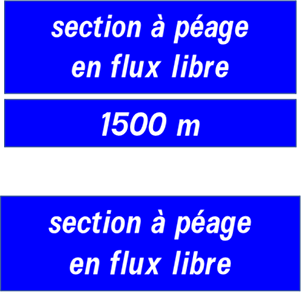
When you travel on a Sanef free-flow toll motorway, several specific signs inform you of the presence of this system. These signs include the words "Free-flow tolling" or "Barrier-free tolling," accompanied by an icon representing a car passing under a gantry.
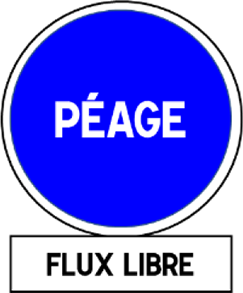 ,
,
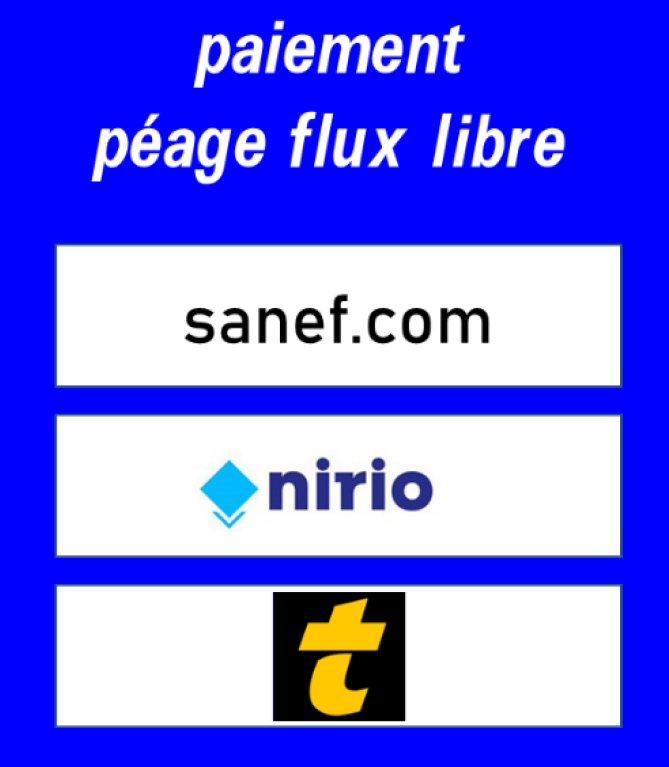
You may also see blue signs indicating the payment methods and reminding you that you must pay the toll, even without a visible barrier. This information is regularly repeated throughout your journey, especially before and after passing under a toll gate.
What do free-flow toll gantries look like?
On free-flow highways, such as the A13/A14 between Paris and Normandy, the old toll plazas are being replaced by gantries equipped with sensors and cameras. These technological devices can read your license plate or detect your electronic toll tag if you have one.
These gantries are easily visible: they are large metal structures spanning the roadway, often preceded by road markings and vertical signage.
What is the principle of free-flow tolling?
On a free-flow motorway, there are no physical barriers. The system is based on automatic vehicle identification, either by license plate recognition or via an electronic toll tag. You don't need to do anything at the time, but it is essential to pay your toll afterward if you don't have a tag.
In summary: what are the signs that indicate you are on a free-flow motorway?
- Presence of specific "Free Flow Toll" signs,
- Visible gantries above the lanes, without barriers,
- Absence of physical barriers,
- Information messages before and after the gantries,
- Payment methods are displayed on signs and on the Sanef website.